
Resource Hub
We will be using this page to share resources, practices, and insights from 9 years of community somatics delivery. Our hope is that these resources scaffold the work of others in our community.

PRACTICE: Trauma-informed yoga
Join Collective Being facilitator Phil for this guided gentle yoga practice. For this practice, you may like to have some cushions, a blanket and/or a yoga mat. Make sure you have enough space to swing your arms and move your body.
In this practice, you will be invited to explore a range of seated, inverted and reclined shapes. Please feel welcome to adapt each shape as your body needs, and to rest as much as you like.

PRACTICE: Trauma-informed meditation
This trauma-informed meditation provides an introduction to the somatic practices of 'orienting', 'grounding' and 'centring'. This practice is led by Collective Being team member and Director Jo Buick (she/her).
This practice is 10 minutes in duration, and can be paused or stopped at any time to take a break, integrate or reflect. We also encourage you to make choices throughout the practice that support your needs and interests.

PRACTICE: Guided meditation
Join Collective Being facilitator Mykah for this guided, trauma-informed meditation focusing on the theme ‘allow and accept’. For this practice, you could be lying down, seated, or even walking if that is more supportive for you.

PRACTICE: Trauma-informed restorative practice
Join Jo Buick for this trauma-informed restorative yoga practice. For this practice, you might like to have a cushion, blanket, yoga mat and/or bolster.
In this practice, you will be guided through a series of reclined shapes. Please feel welcome to adapt for your needs, pause or rest as frequently as required, or to ignore cues that aren’t supportive for you.
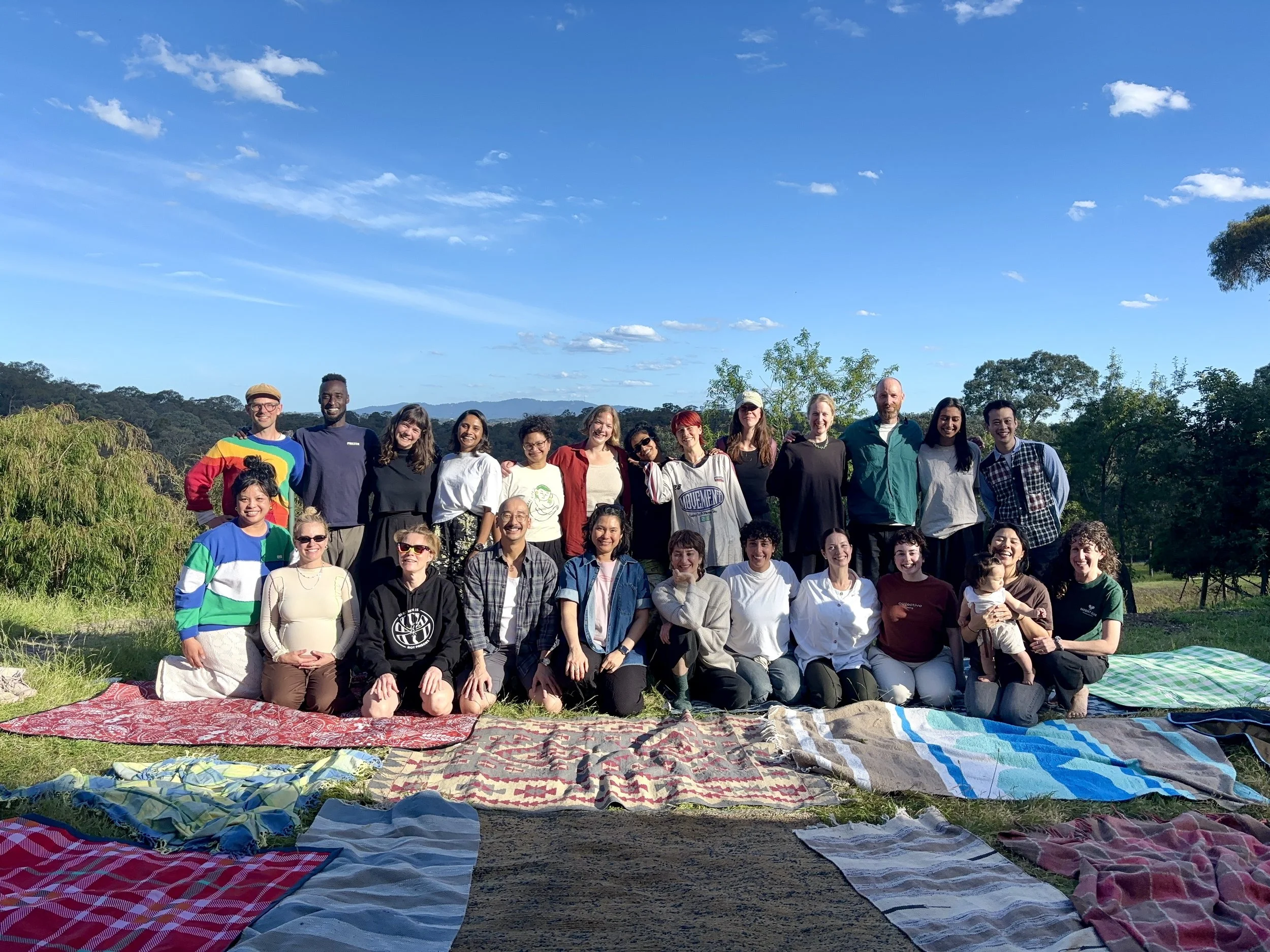
A very CB closing ritual
On a sunny and brisk Sunday afternoon at the beginning of December, we held a Closing Ritual for this chapter of Collective Being's life. After almost a decade of working together as a collective, this seemed like the most natural step to take.
We are closing this chapter of Collective Being
We wanted to share some important news with you.
After 12 months of effort, reflection, and community consultation, it has become clear to our team that in our current format, Collective Being cannot overcome the persistent funding challenges we have been facing.
As a result, at the end of 2025, we will enter a period of hibernation - a time for our team to rest, reflect, and re-strategise for the future.